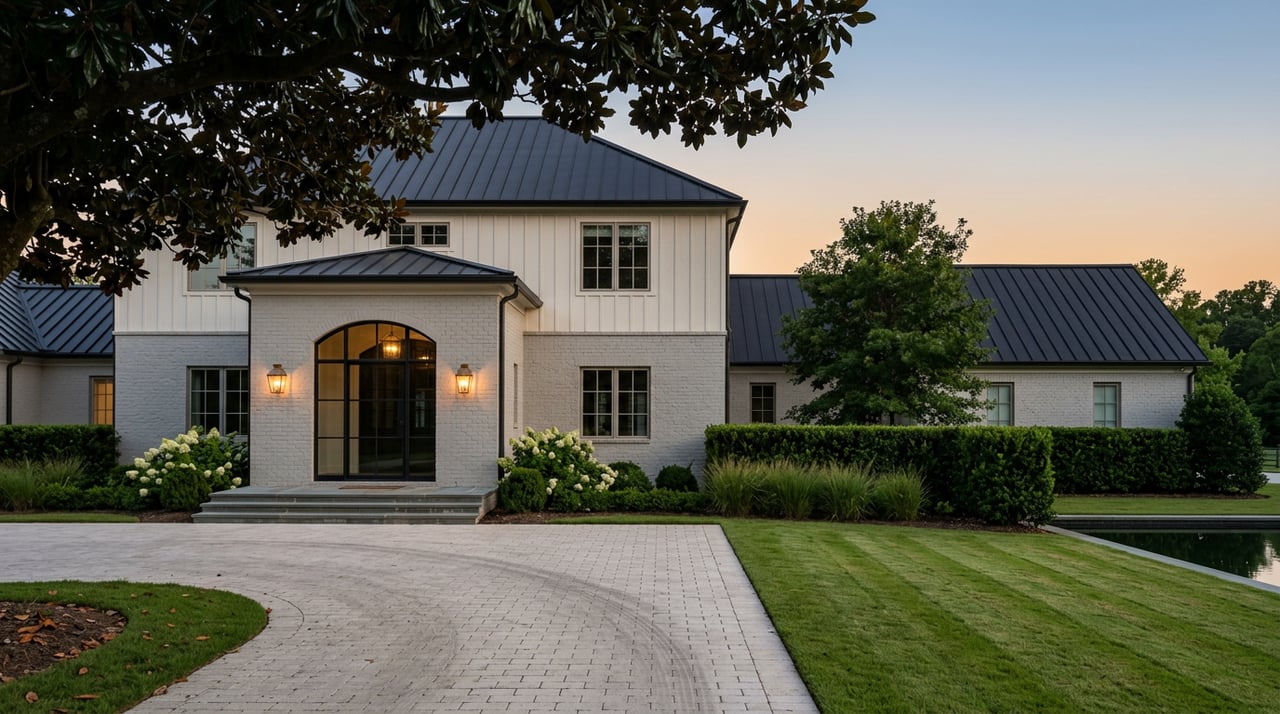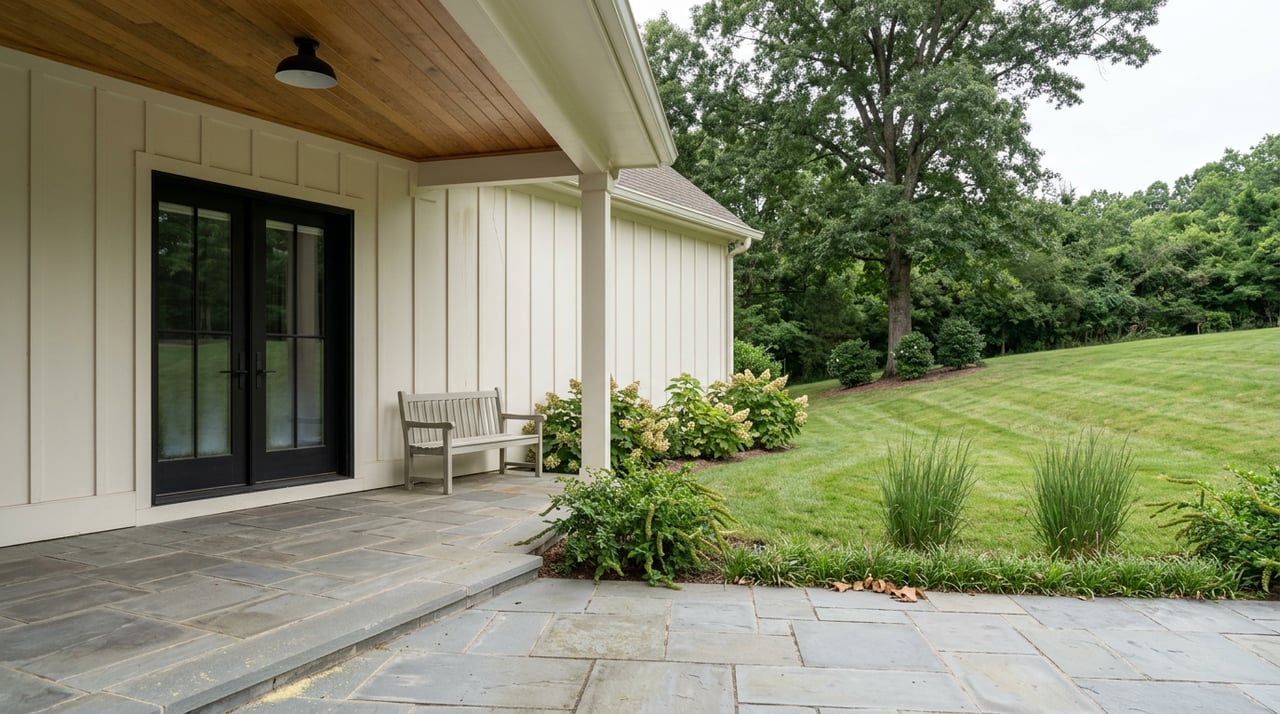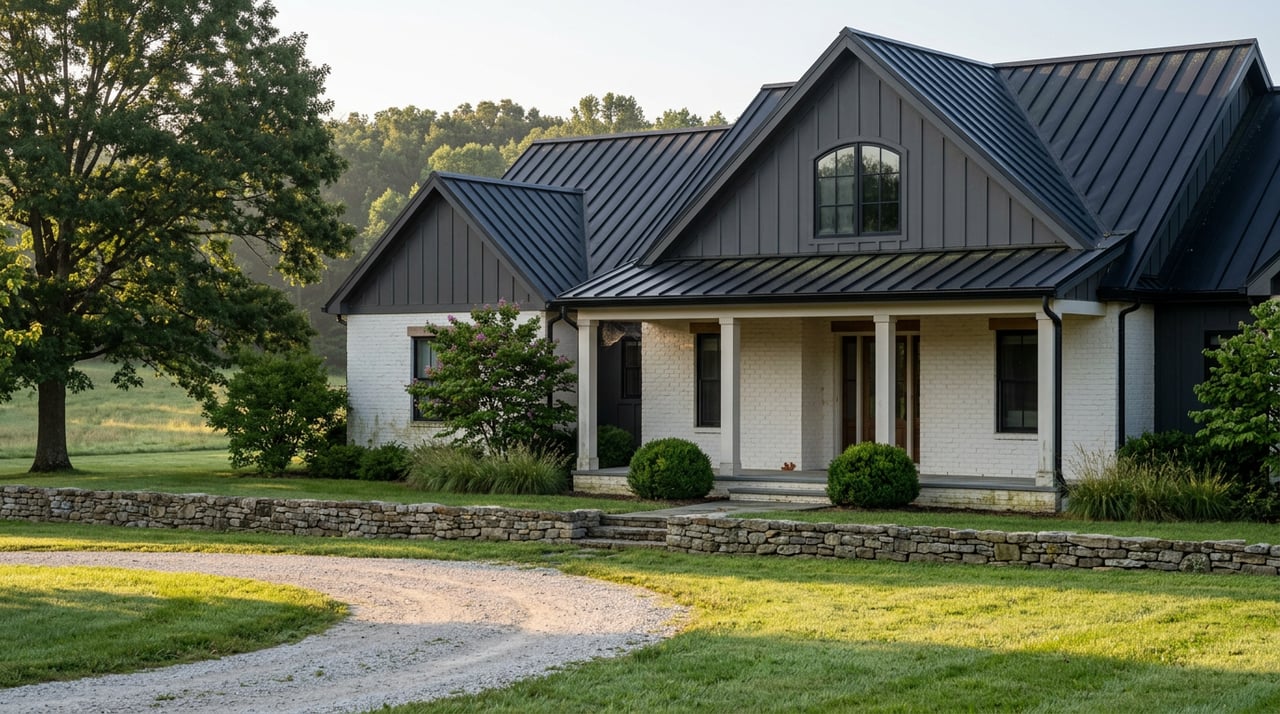
Scroll through active land listings in Williamson County and a pattern repeats often enough to be a signal instead of a coincidence. A 38-acre tract gets marketed around seven acres of open field along a creek, described as the actual building site. An 80-acre farm's headline feature isn't the acreage at all, it's six approved perc sites, the size of home each one supports. A 3.3-acre parcel is sold almost entirely on the strength of three approved perc sites and 681 feet of road frontage. A 12.5-acre "homesite" earns that word specifically because it comes with septic approval for up to an eight-bedroom house.
Sellers aren't burying the lede. They're leading with the one number that actually determines what a buyer can do with the land, because the acreage total and the price per acre tell you almost nothing about that on their own.
If you're comparing raw land or a small farm in Williamson County right now, the dollar figure at the top of the listing is the least useful number on the page. What decides your real cost is three things: how many acres the county's zoning code requires per home you're allowed to build, whether the soil actually passes the test that lets you install a septic system, and whether the parcel carries a Greenbelt tax classification that comes due, with interest, the moment you change what the land is used for.
One County, Four Different "Averages"
Land trackers covering Williamson County right now don't agree with each other, and the disagreement is the useful part. Farmland currently averages somewhere around $109,500 per acre. Undeveloped raw parcels average close to $109,000 per acre. Land marketed as unrestricted, meaning free of subdivision covenants, averages closer to $130,000 per acre. Commercial-zoned tracts average well over $259,000 per acre. A county-wide blend across every active listing lands near $164,000 per acre, while a median calculation across a different slice of the market comes in closer to $95,000.
None of these numbers is wrong. They're measuring different products that all happen to be called "land." Commercial parcels cost more per acre because someone already solved the utility and entitlement questions for you. Unrestricted acreage costs more because the buyer isn't paying a homeowners' association or a covenant to tell them what they can build. Farmland and raw acreage sit lower in part because a meaningful share of what's being priced hasn't been tested for buildability at all, and in part because farmland already enrolled in a use-value tax program carries an assessed value that has nothing to do with what it would fetch on the open market.
One tracker's figure, drawn from a handful of active listings on any given week, put the county average as low as $60,500 per acre. That's not a different market. That's a small sample size producing a number that would look completely different with three more listings added to it. Treat any single "price per acre" headline as a snapshot of whatever happened to be listed that week, not as a fixed fact about the county.
The Zoning Floor That Explains Why "80 Acres" Means "Six Houses"
Williamson County's zoning ordinance sets a minimum acreage per residential structure depending on the district, and that minimum is doing more work than most buyers realize. In the county's Agricultural district, a residential structure requires a minimum of 15 acres. In the Rural District outside the county's designated growth areas, the residential minimum is 5 acres, or 200,000 square feet. Suburban Estate districts step down from there, but the pattern holds across the rural end of the county: you are rarely buying land in units of "how much room do I want," you're buying it in units of "how much the zoning code requires before the county will let you put a house here."
That's why an 80-acre farm gets marketed around six approved perc sites instead of eighty individual acres. Divide 80 by six and the answer lands close to the county's own acreage math for agricultural land, not a developer's guess at what buyers might want. The total acreage on the deed and the number of homes you're allowed to place on it are two different numbers, and the zoning district is what converts one into the other.
The Soil Test Sets the Real Ceiling, and the Rules Are Moving This Year
Most of rural Williamson County has no access to public sewer, which makes septic approval the actual gatekeeper for whether land can support a house at all. Williamson is one of only nine counties in Tennessee that runs its own on-site sewage program instead of deferring to the state environmental agency, through its Department of Sewage Disposal Management. That local control means a percolation test, checking how fast water drains through the soil, along with rock depth and slope, decides whether a parcel needs a standard system, an alternative system, or can't support one at all.
This isn't a settled, static rulebook. The county's Board of Health adopted a set of amendments to the on-site sewage regulations in March 2025, adding new provisions for advanced treatment systems and subsurface drip disposal. A task force spent the first months of 2026 reviewing those same provisions, and the Board of Health held a public hearing in August 2026 on a broad round of proposed changes touching a dozen sections of the code, including the ones adopted barely a year earlier. If you're evaluating a parcel with an older perc test on file, or working from a downloaded copy of the county code, confirm the current version with the Department of Sewage Disposal Management before you let a due diligence deadline run out. The rules that decide whether your acreage can support the house you want are being actively rewritten this year, not filed away as settled law.
Greenbelt Looks Like a Discount. It's a Loan.
A meaningful share of Williamson County's rural acreage is enrolled in the state's Greenbelt program, which taxes agricultural, forest, and open space land based on its current use rather than its market value. Qualifying agricultural or forest land needs a minimum of 15 acres, open space land needs at least 3 acres, and the tax savings can be substantial since the land is assessed as a working farm or forest instead of as future development ground.
The part that catches buyers off guard is what happens when that classification ends. Pull land out of Greenbelt, subdivide it below the qualifying acreage, or convert it to a use the program doesn't recognize, and the county recaptures the tax savings you benefited from. The rollback period is three years for agricultural or forest land, five years for open space land, and ten years for land under an open space easement. A new owner doesn't inherit the previous owner's enrollment automatically either. Greenbelt status has to be reapplied for by the new deed holder, and if it lapses in the gap, the disqualification and rollback bill can follow.
This isn't hypothetical. In February 2026, the Tennessee State Board of Equalization ordered the reinstatement of a Williamson County property's Greenbelt status after the county assessor had issued a rollback assessment when the parcel's forest management plan expired. The owner appealed, arguing the disqualification lacked proper legal footing, and the state board agreed, rescinding the rollback assessments for tax years 2021 through 2023. The dispute is proof the mechanism gets contested in practice, and that the stakes are real enough for owners to fight over.
What to Actually Check Before You Write an Offer
- Confirm the zoning district and its residential acreage minimum before you assume the whole tract is one buildable lot.
- Ask for the perc test results and the date they were performed, and verify with the county whether that test is still valid under the current code.
- Check whether the parcel carries Greenbelt classification, which type, and what the rollback exposure would be if you plan to subdivide or change its use.
- If the listing highlights "approved perc sites" as a feature, treat that as the real headline of the listing, not a footnote.
A Few Questions Worth Asking Directly
Does Greenbelt status transfer automatically when I buy enrolled land? No. The new owner has to file a fresh application with the county assessor's office, and the classification can lapse in the gap if it isn't reapplied for.
If land already has an approved perc site, do I need a new test? Not necessarily, but given that the county revised its septic code in 2025 and reviewed it again in 2026, it's worth confirming with the Department of Sewage Disposal Management that an older approval is still valid under the current rules before you rely on it.
Does "unrestricted" mean the land is automatically buildable? No. Unrestricted refers to the absence of subdivision covenants, not to whether the soil has passed a perc test or the parcel meets the zoning district's acreage minimum.
Where This Leaves a Buyer
The price per acre on a Williamson County land listing is a starting point, not an answer. What decides your real cost is whether the zoning district lets you build one house or six, whether the soil underneath the pretty field photo will actually pass a percolation test under this year's rules, and whether a low tax bill is a permanent feature of the land or a balance that comes due the day you change what it's used for.
If you've already worked through those questions and you're ready to talk about what goes on the land once it's yours, that's where we come in. Franklin Homes has spent decades building factory-built and modular homes designed to match real site conditions, from septic-approved rural homesites to in-fill lots inside the growth areas. Find a retailer near your parcel or visit our model center to walk through floor plans built for the kind of land Williamson County actually has to offer.