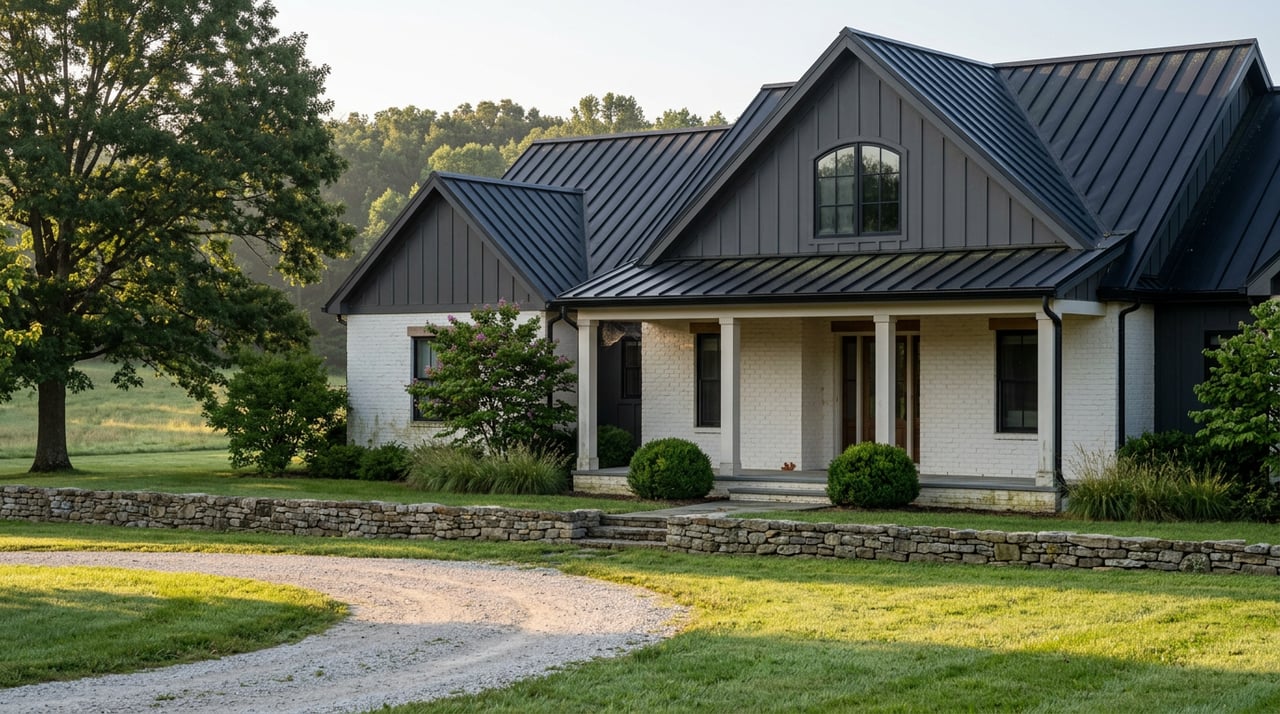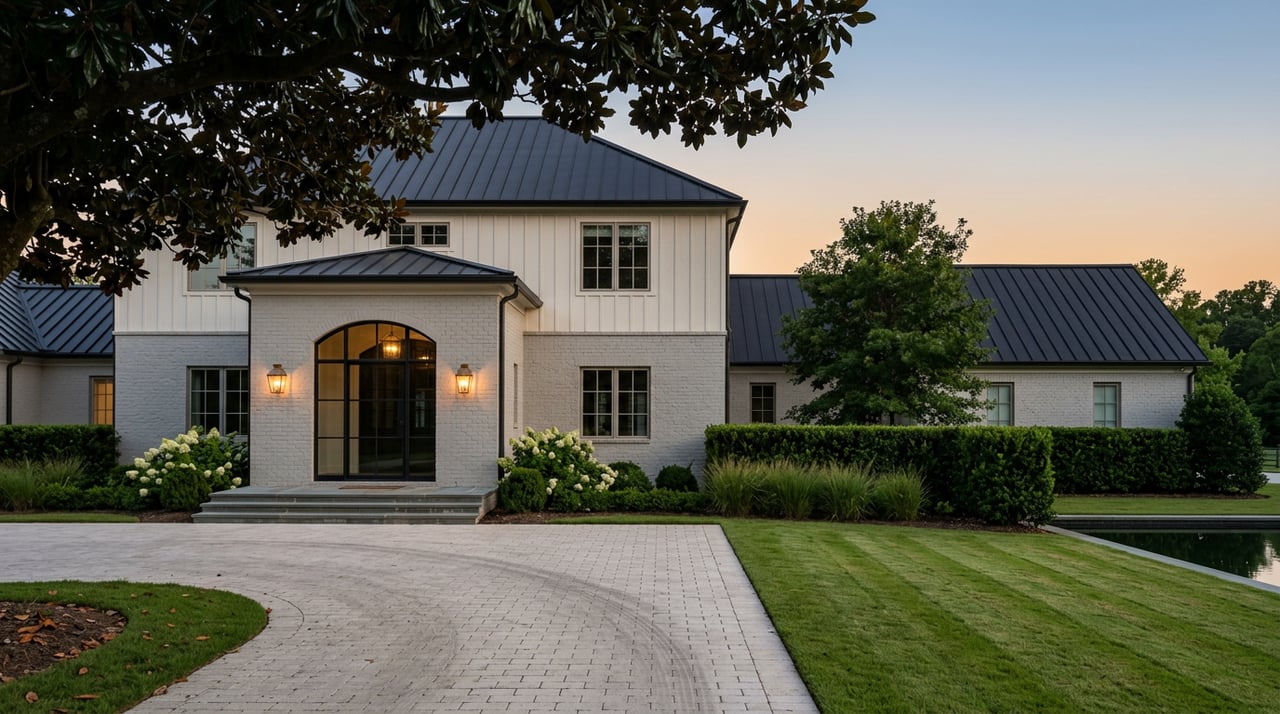
Picture two houses in Canterbury, the master-planned community off Buckner Road. Same builder. Same floorplan. Same street. One sells for tens of thousands of dollars more than the other, and nothing about the siding, the lot, or the finish level explains why. The difference is a boundary that runs invisibly through the middle of the neighborhood. One house sits in Williamson County. The other sits in Maury County. That line alone, according to market trackers following the community in 2026, can move the price by $40,000 to $80,000.
That is not a hypothetical built for effect. It is how Spring Hill's housing market actually works right now, and it is why anyone shopping the city using its citywide median price is working from a number that describes no house in particular. Spring Hill isn't one market wearing one name. It's two markets that happen to share a city limit sign.
One City, Two County Governments
Spring Hill sits at the point where Williamson County ends and Maury County begins, and the boundary doesn't follow the highway or the shopping centers. It cuts through subdivisions, and in Canterbury's case, through a single development. Everything that a county government controls, not the city, changes depending on which side of that line a parcel sits on: school zoning, the county portion of the property tax bill, and which assessor's office holds the record on file.
The city itself collects its property taxes separately from each county rather than issuing one combined bill for all residents, which is the clearest official acknowledgment that this isn't a minor technicality. Spring Hill's own property tax page directs Maury County residents and Williamson County residents to two different county payment portals, and the tax rate page shows the city sets an equal city-level rate of $0.739 per $100 of assessed value on both sides. The disparity buyers actually feel doesn't come from the city at all. It comes from each county's own rate stacked on top of that equal city rate, and it's the county government, not the city, that determines school zoning too. Which government you deal with for taxes, and which school system your kids are zoned for, comes down to which side of a line that has no marker on the ground your specific lot happens to fall on.
What $715,000 Buys Versus What $490,000 Buys
The price gap between the two sides isn't small, and it isn't new. Over the 12 months ending in spring 2026, RealTracs MLS data show 1,085 closed sales across Spring Hill, split almost evenly: 509 in Williamson County and 576 in Maury County. The two halves of that split closed at very different numbers.
| Williamson County side | Maury County side | |
|---|---|---|
| Median sale price (trailing 12 months, 2026) | roughly $715,000 | roughly $490,000 |
| School zoning | Williamson County Schools | Maury County Public Schools |
| New-construction neighborhoods | August Park | Wilkerson Place, Brandon Woods, Barton Hills |
| Active builders | Toll Brothers, John Maher Builders | Signature Homes, Dream Finders, Ryan Homes, Ole South, Century Communities |
| Typical new-construction starting price | upper $700s and up | starting around the $400s |
That's a 46 percent gap between the two medians, on homes carrying the same city name, the same area code, and often the same zip code. Part of that gap tracks with school zoning. Homes on the Williamson County side are zoned for Williamson County Schools. Homes on the Maury County side are zoned for Maury County Public Schools. A buyer choosing a specific district is, whether they realize it or not, also choosing a specific county, and the market has priced that choice in.
Part of it also tracks with which builders are active where. August Park, on the Williamson side, is being built out by Toll Brothers and John Maher with prices running from the upper $700s into the low $1 millions. Cross the line into Maury County and the builder roster changes to Signature Homes, Dream Finders, Ryan Homes, Ole South, and Century Communities, active in communities like Wilkerson Place, Brandon Woods, and Barton Hills, with entry prices starting closer to $400,000.
The rest of each side's map fills in the same pattern without changing it. June Lake, also on the Williamson side, is Spring Hill's largest new development, a mixed-use community anchored by its own I-65 interchange, with a planned 11-acre lake and town center. On the Maury side, Harvest Point delivers its amenities up front, with a resort-style pool, a pavilion, roughly five miles of walking trails, and a dog park, and Southern Springs, a Del Webb active-adult community, gives buyers 55 and older a lower entry cost for age-restricted, low-maintenance living in the same county.
The Same Floorplan Can Wear Two Price Tags
Canterbury is the clearest illustration of what the county line actually costs, because it removes every other variable. It's one master-planned community with a shared pool, shared trails, and a shared playground, but it straddles the Williamson-Maury boundary. Two homes built by the same builder, with the same floorplan, on the same street inside that one development, can carry a documented $40,000 to $80,000 spread depending purely on which side of the line each lot sits on.
That's the part a median price can't show you. A citywide number tells you what the average buyer paid across both counties. It doesn't tell you that identical construction, sold under identical conditions, can land tens of thousands of dollars apart because of a boundary that was drawn long before either house existed and that shows up on no sign, no curb, and no listing photo.
New Construction Adds a Second Layer
The county line isn't the only variable stacking on top of Spring Hill's median. Citywide, new construction has been commanding a premium of roughly $123,000 over resale at the median, according to the same trailing 12-month dataset. That means a buyer comparing a new build in August Park to a resale a few streets over in an established Williamson County neighborhood is actually looking at two different premiums layered together: the county-line premium and the new-construction premium. Pull those apart and the number on a listing page starts to make a lot more sense.
This is also why a builder's advertised starting price in a Maury County community and a resale listing in a Williamson County neighborhood can look like they're competing for the same buyer when they're not. One is priced against new-construction incentives on one side of a boundary. The other is priced against resale comparables zoned to a different school system entirely. Treating them as interchangeable because they share a city name is where a lot of Spring Hill home searches go sideways.
How to Actually Verify Which Side You're On
None of this is visible from the street, and it often isn't visible from the listing either. A zip code can span both counties. A subdivision name can span both counties, as Canterbury does. Even a builder's sales rep or a real estate listing field can have the county wrong, since these are entered manually and errors do get made.
The only reliable way to confirm which county a specific lot sits in is to pull the parcel ID and check it against the county assessor's own records, either the Williamson County Property Assessor or the Maury County Assessor, depending on the general area. That's a five-minute step, and it should happen before an offer goes in, not after. If you're already under contract and haven't confirmed the county, there's still time during your due diligence period to check.
Frequently Asked Questions
Does a Spring Hill mailing address guarantee Williamson County Schools? No. A Spring Hill address can be physically located in either county. The mailing address and zip code are set by the postal service and don't track the county line, so the address alone tells you nothing about which school district or which county tax rate applies.
Are the property tax rates really different within the same city? The city's own rate is equal on both sides, currently $0.739 per $100 of assessed value. The difference shows up in the county portion layered on top of it. Some market trackers in 2026 have put the combined bill at roughly $1.30 per $100 of assessed value on the Williamson side versus roughly $1.91 on the Maury side, though county rates and equalization ratios can shift year to year, so the current figure is worth confirming directly with the county trustee's office before you budget around it.
Can the county line move over time? No. Unlike a school zoning boundary within a single district, which can be redrawn as enrollment shifts, the Williamson-Maury county line is a fixed state boundary. It doesn't move with growth, new development, or annexation the way a school attendance zone can.
The Number That Actually Matters
A citywide median is useful for tracking a market's general direction. It's not useful for telling you what your specific budget buys on a specific street, because in Spring Hill, that answer changes the moment you cross a line no sign marks. Before you fall for a floorplan, a pool, or a starting price, find out which county the lot is actually in. That single fact will tell you more about your final price, your tax bill, and your school zoning than the citywide median ever could.
If you're weighing a move to Spring Hill and want a second set of eyes on which side of the county line a specific listing falls, Lisa Alyn can walk through the parcel details with you before you write an offer, not after.